 Today · Echonomia Post
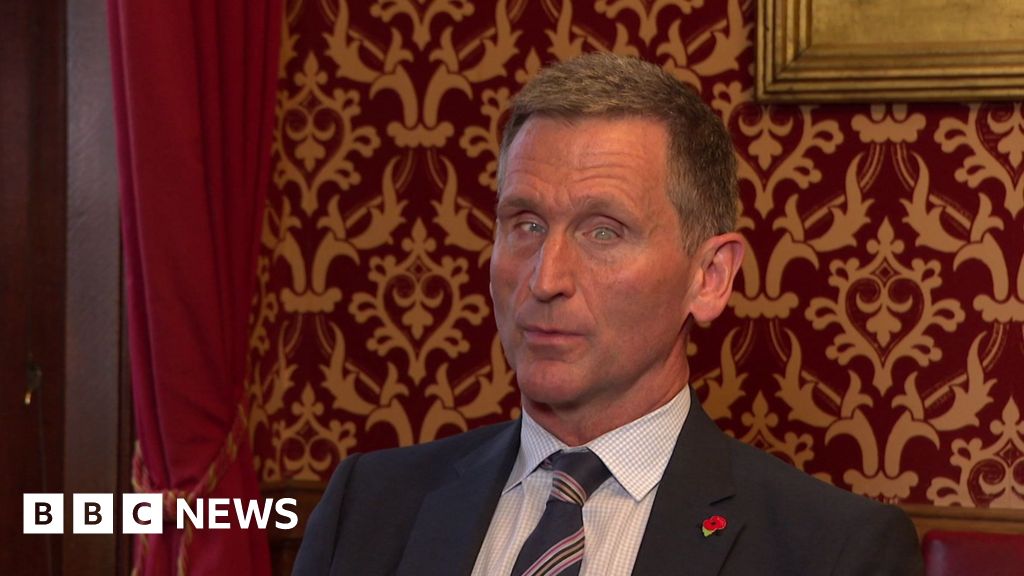
2 hours ago Thomas Magill London BBC Lord Holmes wants the government to set up a taskforce to address the barriers blind and partially sighted people face getting into employment A government taskforce needs to be created to help blind and partially sighted people access work, a report has concluded. According to the Out of Sight – Out of Work report , 73% of blind and partially sighted people of working age in the UK are not in employment compared to 27% of the non-disabled population. Report author Lord Holmes of Richmond, who went blind in childhood, said: "The most important thing we need from government is clear leadership and a commitment to establish a taskforce." The Department for Work and Pensions (DWP) has said it wants every visually impaired person who can work to have the support they need.
Willow Horner is one of the many thousands of visually impaired people looking for work. She recently completed an internship organised by national sight loss charity the Thomas Pocklington Trust, in central London. The trust's Get Set Progress programme, an initiative developed in collaboration with the Royal National Institute of Blind People, has organised approximately 150 internships.
Horner, who uses a cane, said she wanted to pursue a career in marketing or communications and hoped the nine-month internship had improved her chances of securing a job. She was unemployed for a year before she began the scheme. "Since finishing the internship in July, I've done roughly 40 applications and I've had one interview," she said.
Willow Horner has applied for 40 jobs in five months and only secured one interview She said she had found the recruitment process and its use of AI challenging and said employers needed to have an open mind about employing people with sight loss. "The main thing you come up against is that someone just doesn't know enough about visually impaired people in the workplace and what that actually looks like," she said. "They [employers] can't get over their preconceived notions of what visually impaired people in the workplace might look like and the effort they might have to put in." Lord Holmes said the report highlighted several barriers that blind and partially sighted people face getting into work.
They include policy, funding and accountability; employer practices, recruitment processes and workplace issues; data and measurement; technology. He said these needed to be addressed urgently, so everyone could benefit and the employment disparity could be addressed. "Imagine if they were enabled and impowered to be in employment," he said.
"That is adding to our economy, productivity, GDP and reducing welfare benefits. "These are individuals who want to work and who have skills and talent to bring. This is such a waste of talent." Bradley Tomsett from Greenwich has been looking for a role where he can use his computer skills.
He uses a cane to help get around and said he had struggled to find work after he too finished the internship in July. "I have applied for between 40 and 50 jobs since the internship and I've had five interviews," he said. "Using my cane to get out and about to give me stability when going to interviews, it can put an employer off or they could make an unconscious judgement." Tomsett added that before the internship he was unable to secure any interviews, unlike now.
Both he and Horner told me they were determined to remain positive about finding work. Bradley Tomsett said sometimes employers judged blind people and their ability unconsciously Josh Feehan, who runs the internship scheme at Thomas Pocklington Trust, said it was a paid opportunity to "gain skills, confidence and experience". The trust also supports businesses to welcome and support visually impaired people in work.
"We do a lot of work with employers and provide training with their staff to make sure they feel comfortable," Feehan said. "We also look at their recruitment processes including their website to make sure that's accessible and provide advice and guidance around reasonable adjustments." The DWP said the Access to Work scheme could help people with the cost of specialist equipment, assistive software, and with support workers such as a job coach or a travel buddy. The scheme can also be used to help with the costs of commuting if someone cannot use public transport.
The DWP added: "We are investing £3.5bn in disability employment support, including support for blind and partially sighted people to fulfil their potential." More on this story
Source: BBC